Saturday, February 17, 2007

A New Iteration of the 1956 Dartmouth Artificial Intelligence Conference?

Tim van Gelder wrote in one of his blogs:
This is day 1 [Jan. 29, Melbourne time, but Jan. 28, New York City time] of the Graphic and Visual Representations of Evidence and Inference in Legal Settings conference in New York. Probably never before have so many argument mapping aficionadoes been gathered at one place before. It is only a small conference - maybe 75 people total - but the concentration of interest is remarkable. I’d only met two of these people before, and then only briefly, but “knew” dozens of them in varying degrees by internet association or being otherwise acquainted with their work. In addition to the academics there are a number of lawyers and others coming from a more commercial direction, and their presence/interest is an indication of how structured argumentation, argument visualisation, etc., are starting to get traction outside of narrow academic niches. There’s a good chance that in 10-20 years it will turn out that this conference was a pivotal moment in the field of argument mapping - a bit like the 1956 Dartmouth Artificial Intelligence workshop.
For another image of some people (Chris Reed & Tim van Gelder) at the conference see Pierre Pilon's posts for January 28, 2007.

Saturday, February 10, 2007

Friday, February 02, 2007

The Evidence Visualization Conference Is Over

The conference on graphic and visual representations of evidence and inference in legal settings is over -- and a good time was had by all (or almost all).

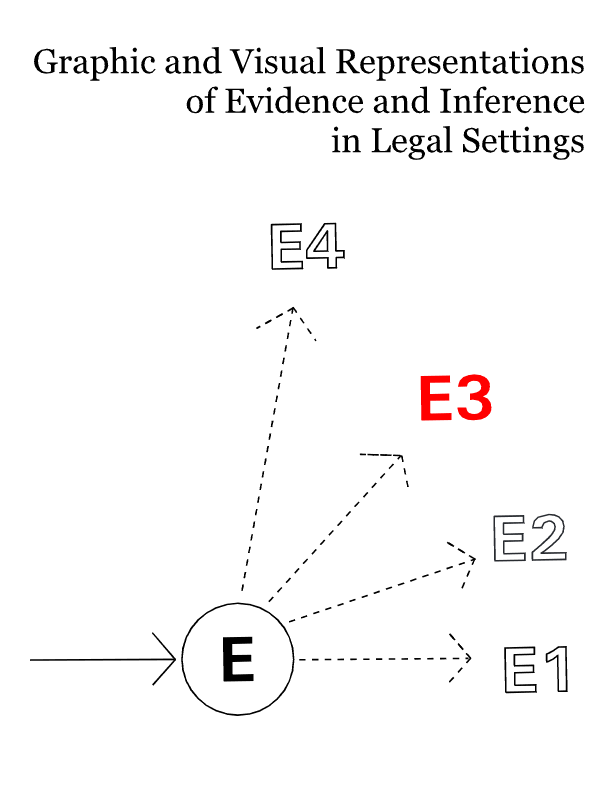
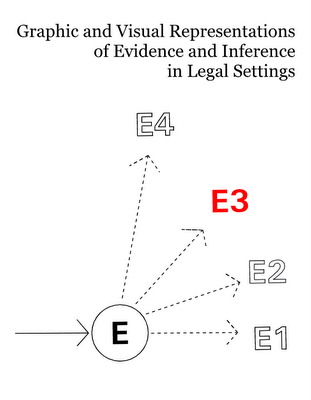
Susanne Hoogwater celebrated the conference with a graphic impression of the conference theme and topics. (But one attendee complained that storytelling and causality had been left out of the image.)

Watch for the papers and comments at the conference web site and, in the long run, at Law, Probability and Risk

P.S. One attendee wrote, "Applying technology to problems in philosophy, law, critical thinking, education, etc. etc. could do for those disciplines what Excel has done for accounting." I didn't say that. But do you suppose it might be true?

Liberty under Law: Whatever Happened to Probable Cause, Due Process of Law, Trial by Jury, Proof beyond Reasonable Doubt, Public Trial, Etc., Etc.?

The Fifth Amendment to the Constitution of the United States provides in part:
No person shall ... be deprived of life, liberty, or property, without due process of law.
The Fourth Amendment provides:
The right of the people to be secure in their persons, houses, papers, and effects, against unreasonable searches and seizures, shall not be violated, and no warrants shall issue, but upon probable cause, supported by oath or affirmation, and particularly describing the place to be searched, and the persons or things to be seized.

The Fourteenth Amendment provides in part:

[N]or shall any state deprive any person of life, liberty, or property, without due process of law.
The Sixth Amendment provides:
In all criminal prosecutions, the accused shall enjoy the right to a speedy and public trial, by an impartial jury of the state and district wherein the crime shall have been committed, which district shall have been previously ascertained by law, and to be informed of the nature and cause of the accusation; to be confronted with the witnesses against him; to have compulsory process for obtaining witnesses in his favor, and to have the assistance of counsel for his defense.
These rights apparently do not extend to ants, termites, pigs, horses, amoeba, dogs, or ants. They may not extend to Martians. They may not extend to homo sapiens aliens living abroad. They may not extend to humanoid aliens legally residing in the U.S.A. And they may not extend to native-born residents and citizens of the United States of America. Or so the Justice Department suggests:
“What would prevent you from plucking up anyone and saying, ‘You are an enemy combatant?’ ” Judge Roger L. Gregory of the United States Court of Appeals for the Fourth Circuit asked the administration’s lawyer, David B. Salmons.

Mr. Salmons said the executive branch was entitled to make that judgment in wartime without interference from the courts. “A citizen, no less than an alien, can be an enemy combatant,” he added.

Adam Liptak, Judges Pose Questions on Bush Detainee Policy, NYTimes Online (Feb. 1, 2007)

Friday, January 19, 2007

Conference on Graphic and Visual Representations of Evidence and Inference in Legal Settings

Cardozo School of Law will host a conference on

Graphic and Visual Representations of Evidence and Inference in Legal Settings

Dates: January 28-29, 2007.

Venue: Cardozo Law School, Yeshiva University, 55 Fifth Avenue (5th Ave. & 12th St.), New York (Manhattan), New York

Program

First day (January 28, 2007):

9.00am-9.20am: Welcoming Comments (P. Tillers)

9.20am-11.00am:

Moderator: Henry Prakken
Vern Walker, Visualizing the Dynamics around the Rule/Evidence Interface in Legal Reasoning
Richard Sherwin & Neal Feigenson, Thinking beyond the Shown: Implicit Inferences in Visual Evidence and Argument
Marc Lauritsen, Comment

11.00am-11.20am: coffee break

11.20am-1.00pm:

Moderator: Thomas Cobb
Tim van Gelder, Rationale: A Generic Argument Mapping Tool
Chris Reed, Wigmore, Toulmin and Walton: The Diagramming Trinity and their Application in Legal Practice
Dale Nance, Comment

1.00pm-2.00pm: lunch

2.00pm-3.40pm:

Moderator: Justin Hughes
John L. Pollock, Some Puzzles about Defeasible Reasoning
Ron Loui, A Modest Proposal for Annotating the Dialectical State of a Dispute
Richard Lempert, Comment

3.40pm-4.00pm: tea break

4.00pm-5.20pm:

Moderator: Richard Lempert
Thomas F. Gordon & Doug Walton, Visualizing Arguments of the Carneades Argumentation Framework
Bart Verheij, Virtual Arguments: On the Design of Argument Assistants for Lawyers and Other Arguers

5.20pm-6.30pm: dinner

6.30pm-8.15pm:

Moderator: Thomas Gordon
Doug Walton, Argumentation Theory for the Law of Evidence
Henry Prakken, Argument Visualisation Software for Crime Investigators: Design and First Experiences
William Twining, Comment

Second day (January 29, 2007):

9.00am-10.40am:

Moderator: William Twining
John Lowrance, Graphical Manipulation of Evidence in Structured Arguments
John Josephson, Graphical Display of Evidence and Inference in a Prototype System for Command-Post Information Fusion
Kevin Ashley, Comment

10.40am-11.00am: coffee break

11.00am-1.00pm:

Moderator: Kevin Ashley
David Schum & Jon Morris, Law Comes to the Rescue of Intelligence Analysis: Evaluating HUMINT
Philip Dawid & Amanda B. Hepler, Bayesian Networks for the Analysis of Evidence
Branden Fitelson, Argument Diagrams, Bayes Nets, and Independent Evidence

1.00pm-2.00pm: lunch

2.00pm-3.40pm:

Moderator: Jonathan Gottfried
Bruce Hay, The Iconography of the Wigmore Chart
Priit Parmakson, Can Effective Visual Representations Be Produced Systematically?
Neal Feigenson, Comment

3.40pm-4.00pm: tea break

4.00pm-6.00pm:

Moderator: Neal Feigenson
Jennifer Mnookin, Visual and Expert Evidence: Rhetorical Connections and Invisible Affinities
Samuel Solomon, Visual Storytelling - Contextualizing Evidence through Visualization Taken from Real Cases
Deirdre Dwyer, Comment
David Tait, Comment

6.00pm-6.15pm: Closing Comments (Henry Prakken)


Peter Tillers (Cardozo Law School): Conference chair; e-mail address: peter@tillers.net
Henry Prakken (Universiteit Utrecht & University of Groningen): Program chair; e-mail address: henry@cs.uu.nl
Thomas D. Cobb (University of Washington, Seattle): Deputy program chair; e-mail address: tomcobb@u.washington.edu
Jonathan Gottfried: Local affairs coordinator: Jonathan Gottfried; e-mail address: jgottfried@pobox.com"


Panelists:

  • Kevin Ashley University of Pittsburgh School of Law)
  • Thomas D. Cobb Lecturer University of Washington School of Law
  • Philip Dawid Professor of Statistics University College London
  • Deirdre M. Dwyer British Academy Post Doctoral Fellow Pembroke College Oxford University
  • Neal Feigenson Professor Quinnipiac University School of Law
  • Branden Fitelson Assistant Professor of Philosophy University of California at Berkeley
  • Tim van Gelder Associate Professor of Philosophy University of Melbourne
  • Thomas F. Gordon Senior Research Scientist eGovernment Competence Center Fraunhofer Institut fuer Offene Kommunikationssysteme; web log
  • Bruce Hay Professor Harvard Law School
  • Amanda B. Hepler Department of Statistical Science University College London
  • John Josephson Research Scientist Laboratory for Artificial Intelligence Research Computer Science and Engineering Ohio State University
  • Marc Lauritsen President Capstone Practice Systems
  • Richard Lempert Eric Stein Distinguished University Professor of Law and Sociology University of Michigan Law School
  • Ronald P. Loui Associate Professor of Computer Science and Engineering Washington University in St. Louis
  • John D. Lowrance Program Director, Artificial Intelligence Center SRI International
  • Jennifer Mnookin Professor UCLA School of Law
  • Jon Morris Affiliate Faculty Member School of Information Engineering and Technology Systems Engineering and Operations Research George Mason University
  • Dale Nance Professor Case Western Reserve University School of Law
  • Priit Parmakson Lecturer Tallinn University
  • John L. Pollock Professor of Philosophy and Cognitive Science University of Arizona
  • Henry Prakken Lecturer, Department of Information and Computing Sciences Utrecht University & Professor of Law and ICT Faculty of Law University of Groningen
  • Chris Reed Senior Lecturer & Assistant Head of Research University of Dundee
  • David Schum Professor Systems Engineering & Operations Research George Mason University
  • Richard Sherwin Professor & Director, Visual Persuasion Project New York Law School
  • Samuel Solomon Chairman & CEO DOAR Litigation Consulting
  • David Tait Senior Lecturer School of Law University of Canberra
  • Peter Tillers Professor Cardozo School of Law Yeshiva University
  • William Twining Quain Professor of Jurisprudence emeritus University College London Law Faculty & Professor University of Miami School of Law
  • Bart Verheij Lecturer & Researcher Artificial Intelligence University of Groningen
  • Vern Walker Professor Hofstra University School of Law
  • Douglas N. Walton Professor of Philosophy University of Winnipeg

    Description of conference:

    One of the largest problems faced by criminal investigators, litigators, paralegals, triers of fact, and others interested in disputes about factual questions in legal settings is the sheer mass of evidence available. It is often difficult to remember, retrieve, and interpret voluminous evidential information, and important relationships and inconsistencies may go unnoticed as a result. Tools that support the storage, retrieval, and interpretation of large masses of evidence would therefore be of great use.

    Psychological studies have shown that people's ability to remember, retrieve, and interpret information is greatly enhanced when they organize it in a way that is meaningful to them. Scholars of the law of evidence have long suggested that graphical representations of evidential arguments and inferences could help people make sense of masses of evidence. As early as 1913, John Henry Wigmore claimed that his charting method promotes rational thinking about legal evidence. Wigmore had only pencil and paper to draw his cumbersome graphs. Today computer software may make it possible for almost anyone to construct useful graphical representations of arguments and inferences related to large collections of evidence. If such software were combined with with existing database, document management, and search technology, documentary evidence could be stored and retrieved in accordance with the user's view of a case. This would facilitate the transfer of a case file from one person to another because it would make it easier for recipients of files to grasp the signficance of the evidentiary details of a case. Software for graphical representation of evidential argument is currently being investigated for use in various domains. Argument visualization software has been designed, for instance, to support the teaching of scientific reasoning and critical thinking skills (e.g., Belvedere, Reasonable, Araucaria, Convince Me), to support intelligence analysis, and to facilitate individual or collaborative problem solving (e.g., Questmap, SEAS). Moreover, current artificial intelligence research offers precise accounts of evidential reasoning and thus provides a clear semantics of graphical notations as well as computationall methods.

    In the legal domain, fact investigators and litigators increasingly use software that supports the storage and retrieval of information in terms of conceptual and relational networks (e.g., Holmes 2, Analyst's Notebook). As yet, however, such tools offer little or no support for structuring thinking about information: existing software allows users to store evidentiary data in terms of events, objects, actors, and the relations among these things, but it does not allow users to represent how such data support or undermine factual hypotheses.

    This interdisciplinary conference brings together scholars and practitioners from fields such as law, philosophy, computer science, artificial intelligence, cognitive psychology, and linguistics. The following topics and issues will be addressed:

    • New and current graphical means for visualization of factual inference and proof.
    • Semantics of graphical notations: what are the underlying theories of evidential reasoning, including jurisprudential, philosophical, psychological, rhetorical, logical, and mathematical theories?
    • Software tools that are currently available or under development for graphical representation of factual inference and proof.
    • Potential contexts for the use of such software (e.g., criminal investigation, intelligence analysis, trials, and law teaching).
    • Can graphical representation of evidential argument support automatic evaluation of hypotheses?
    • How can current insights into human-computer interactuions be exploited to increase the usefulness of such software; e.g., how can visual complexity generated by large masses of evidence be managed?
    • Are there pertinent empirical studies and findings about real-world use of evidence-charting methods in legal and other contexts?

    For drafts and abstracts of some conference papers please go to http://tillers.net/conference.html. Final versions of the papers will be published in Law, Probability and Risk in 2007 and 2008.


    The public is warmly encouraged to attend the conference. Advance registration is not required and there is no registration fee. However, there will be a charge for any lunches or dinners that attendees elect to take at the site of the conference, at Cardozo Law School. If you are not a panelist and would like to join us for any lunches or dinners at Cardozo, please RSVP to the address shown below by January 15, 2007, and indicate which meals you wish to purchase, enclosing payment of $35 for each. Please make checks payable to Cardozo School of Law. Send payment to

    Alisa Norr Legal Secretary Friedman Kaplan Seiler & Adelman LLP 1633 Broadway, 46th floor New York, NY 10019 United States


    Hotel arrangements may be made through the conference travel agency:

    Morris Park Travel Bureau 1745 Wiliamsbridge Road Bronx, NY 10461 1-718-792-9850 or toll free 1-877-526-8844 Fax: 1-718-863-7121 Email: MPTVL@AOL.COM
  • Saturday, January 13, 2007

    The Lugubrious Results of One Detainee's Effort to Secure the Attendance of Witnesses before the Combatant Status Review Tribunal

    From Memorandum by Legal Advisor to Combatant Status Review Tribunal (December 16, 2004):
    d. The detainee requested the production of nine witnesses. These requests are itemized, although somewhat inaccurately, in paragraph 4of enclosure (1) to the Tribunal Decision Report. Each witness is described below.

    1. Shahid Abassi -The detainee proffered that this witness would testify that the detainee was fleeing the war in Afghanistan and was not armed. The detainee could not provide locating information for this witness other than to state that the "Rashid Trust charity organization" might know his whereabouts. The Tribunal President determined that the wimess was not reasonably available due to the limited locating information supplied by the detainee. In my opinion, this decision was not an abuse of discretion given the paucity of irfformation provided by the detainee.

    2. Tahir Ashraf- The detainee proffered that this witness would testify that the detainee spent the preponderance of his time in Afghanistan building a school and teaching at another school. The detainee stated that the witness lived in the United Kingdom and could be located through the detainee’s father. The Tribunal President determined that the winess was relevant and requested the U.S. State Department to initiate contact with the witness. Contact was established but the wimess did not reply to inquiries regarding whether they were willing to testify at the tribunal. Under the circumstances, the Tribunal President determined that the wimess was not reasonably available. In my opinion, this decision was not an abuse of discretion by the President.

    3. [name deleted]-The witness was the detainee’s wife. The detainee proffered that this witness would testify that the detainee did not support terrorist organizations or military activities. The detainee stated that the witness lived in the United Kingdom and could be located tttrough the detainee’s father. The Tribunal President determined that the witness was relevant and requested the U.S. State Department to initiate contact with the witness. Contact was established but the witness did not reply to inquiries regarding whether she was willing to testify .... Under the circumstances, the Tribunal President determined that the witness was not reasonably available. In my opinion, this decision was not an abuse of discretion by the President.

    4. Abdul Walid- The detainee proffered that this witness would testify that the detainee did not support terrorist organizations or military activities. The detainee stated that the witness lived in the United Kingdom and could be located through the detainee’s father. The Tribunal President determined that the witness was relevant and requested the U.S. State Department to initiate contact with the witness. Contact was established but the witness did not reply to inquiries regarding whether he was willing to testify at the tribunal. Under the circumstances, the Tribunal President determined that the witness was not reasonably available. In my opinion, this decision was not an abuse of discrefian by the President.

    5. A Sudanese in charge ofthe [deleted] camp -It appears that the detainee proffered that this witness would testify that the [deleted] camp had no ties to al Qaida or the Taliban and also that the detainee did not attend the camp (in which case the location of the camp seems to be relevant). In any event, the witness was identified by the Tribunal as detainee ISN [deleted]. When approached by the Personal Representative, the witness refused to testify at the tribunal but provided an oral statement that was reduced to writing by atranslator. This statement was included in the evidence as exhibit D-g.I Althungh the Tribunal President did not render a formal decision on the relevance and reasonable availability of this witness, it is apparent that he was neither.

    6. Patrick Hamilton- The detainee proffered that this witness was an ICRC employee who would testify that the detainee had previously been issued a POW identity card at a U.S. detention facility in Kandahar, Afghanistan. The Tribunal President initially determined that the witness was relevant, but after consultation with the Assistant Legal Advisor, she changed her determination.~She based her decision on her conclusion that the Combatant Status Review Tribunals do not have the discretion to determine that a detainee should be classified as aprisoner of war -only whether the detainee satisfies the definition of "enemy combatant" as provided in references (a) and (b). In my opinion, this decision was correct it bears noting that in a written statement prepared by the detainee especially for the CSRT, the detainee specifically says that he does not claim POW status (see exhibit D-e).

    7. [name deleted]- The detainee stated that this witness was amember of the U.S. armed forces and could testify that the detainee had been classified as aprisoner of war when detained in Kandahar. For the reasons indicated in paragraph l(d)(6) above, witness was deemed not relevant.

    8. [name deleted] detainee proffered that the witness accompanied the detainee in Afghanistan and could testify that the Government atlegafions were false. For the reasons discussed in paragraph 3of enclosure (2) of the Tribunal Decision Report the Tribunal President determined that the witness was not reasonably available. Under the circumstances, the Tribunal President had no option other than to hold that the witness was not reasonably available.

    9. Abu Ukashah- The detainee proffered that the witness only testify that he was with the detainee in Afghanistan and the Government allegations were false. The detainee stated that the Karkhana police station in Peshawar, Pakistan, would have locating information for this witness. The Tribunal President initially determined that the witness was relevant and reasonably available (see enclosure 5of the Tribunal Decision Report). Paragraph 4 of enclosure (1) of the Tribunal Decision Report, which documents the Tribunal’s ruling on witness requesls, does not mention the request for Abu Ukashah at all. I have confirmed with CSRT personnel in Guuntunamo Bay, however, that Abu Ukashah was included among the names provided to the U.S. State Department with the request for assistance in locating witnesses (see enclosure (2)). State Department was unsuccessfnl in making contact with this witness. Although the Tribunal Decision Report does not address a final decision on this witness, it appears that he was not reasonably available.

    The Question of the Need for the Hearsay Rule Revisited: The Possible Lessons of Guantanamo

    Nat Hentoff, that tireless crusader for civil rights and civil liberties -- i.e., that stout defender of the rule of law -- offers interesting comments on the Denbeaux studies of the results of proceedings before the Combatant Status Review Tribunals [CSRT]. See Nat Hentoff, America has slipped deeper into a legal black hole, Journal Times Online (Jan. 13, 2007):
    In recent months, two extensively documented reports from New Jersey's Seton Hall Law School, based entirely on Defense Department data, rebut the administration's contention - exemplified by departed Defense Secretary Donald Rumsfeld - that most of the detainees "are the best-trained, most vicious killers on the face of the Earth."

    Researched and written by law professor Mark Denbeaux; his son, Joshua (counsel to two Guantanamo detainees); and law students at Seton Hall, the reports demonstrate that: "Only 8 percent of the detainees were characterized (in the Defense Department data) as Al Qaeda fighters. Of the remaining detainees, 40 percent have no definitive connection with Al Qaeda at all." As for those picked up in Afghanistan, "86 percent were arrested by either Pakistan or the Northern Alliance and turned over to United States custody."

    And there is this revealing information: "This 86 percent of the detainees captured by Pakistan or the Northern Alliance were handed over to the United States at a time when the U.S. offered large bounties for capture of suspected terrorists." The captives in these mass roundups were hardly screened carefully for their terrorist connections by the bounty hunters - nor were they carefully screened, according to international law criteria, by our armed forces.

    Once at Guantanamo, to what extent were these prisoners given the due-process rights ordered by the Supreme Court in Rasul v. Bush (2004) and Hamdan v. Rumsfeld (2006)? This is what the Seton Hall reports found in the Defense Department documents: "When considering all the hearings, 89 percent of the time, no evidence was presented on behalf of the detainees." And the government's classified evidence, intended to be the most powerful - evidence the prisoners were not allowed to see and rebut - was always presumed by the tribunal to be reliable and valid. So much for any presumption of innocence - essential to due process.

    The evidence against the detainees was always presumed to be "reliable and valid"!?!?

    If I am not mistaken, the CSRT proceedings that Denbeaux studied were governed by the old Military Commissions rules, which imposed no special requirements for the use of hearsay evidence and permitted the Tribunal to consider all evidence having probative value in the eyes of a reasonable person. According to Hentoff and, apparently, Denbeaux and his collaborators [I wonder: will someone attack this post for relying on hearsay?], it appears the CSRT never found the evidence wanting in probative value. This finding of the Denbeaux studies is rather startling -- given that a substantial number of the detainees came into U.S. hands as a result of arrests made by Pakistan and the Northern Alliance and that at least some of these arrests were made "at a time when the U.S. offered large bounties for capture of suspected terrorists." Can it be that the evidence supporting the detention of all such persons was such that it had probative value in the eyes of a reasonable person? One suspects that the reason that the Tribunal in such instances found the evidence sufficiently probative to be considered was that the Tribunal had before it nothing other than a barebones report by some American military person who reported that someone in Pakistan or someone in the Northern Alliance had taken the detainee into custody because some other person had supposedly reported that the detainee was a combatant, a terrorist, or some such thing, and that the Tribunal implicitly (or possibly explicitly) reasoned that it could not release any one detainee detained on the basis of such evidence without releasing all similarly-situated detainees. If so, perhaps this sad story suggests once again that the hearsay rule does indeed have an important function, a function that a requirement of "reasonable probative value" (or some such formulation) does not adequately perform. If so, the next question is whether the new rules for proceedings before the military commissions -- rules that require that the detainee be given advance notice that hearsay evidence will be used against him -- sufficiently performs the function or functions that the hearsay rule serves. (Much depends, I would think, on whether the detainee has the resources and the opportunity to conduct a pre-hearing investigation of the hearsay evidence to be used against him. {Even the opportunity to conduct such an investigation does not guarantee that jsutice will be done. Imagine the many obstacles that any such investigation would face.})

    Tuesday, January 09, 2007

    New York Stinks -- Sometimes

    See Darin Foster, New York Stinks, The smelly secret of America's largest city, OhmyNews International (Jan. 9, 2007).

    Samples of this delectable fare:

    Inevitably, many [unlovely] odors find their way down into New York's decrepit subway system. The morning commute is always a treat for the senses. Packed in like cattle, even normal human smells sometimes reach overwhelming proportions, and this is before the homeless make their appearance. Sad as it may be, one homeless person can clear an entire train car in less than 10 seconds. Add to this the smell of decades-old dirt, mold and general decay, and you can imagine something of the typical New York subway smell.

    On the other hand, certain smells can be useful markers in such a vast city. Anyone hunting for Claremont Riding Academy, New York's last surviving urban equestrian center, can locate it three blocks away without a map. While the facility does its best to maintain a clean, professional establishment, the fact remains that dozens of horses reside and are trained within a converted apartment building. Certain facts of nature simply cannot be avoided, and a familiar horsey smell permeates the surrounding neighborhood.

    The catalyst for this minor non-odiferous masterpiece was a mysterious odor that enveloped large chunks of Manhattan and parts of New Jersey for several hours.

    Sunday, January 07, 2007

    Quality and Quantity

    On the place of numerical quantification in law, see Priit Parmakson's delicious parable Qualitalia and Numer.
  • One might say that Parmakson highlights (among other things) the quantity of quality in law.
  • Saturday, January 06, 2007

    Blog Tag -- Five Things about Me

    Tim van Gelder tagged me in a kind of blog-network pyramid scheme: relate five things about yourself that others may not know, then tag five others. Although this feels a bit like the sort of thing that junior high school (middle school) students do, I cannot resist the siren call of a person as eminent as Tim van Gelder. So here goes:
    1. In 1905 the Czar of Russia exiled my maternal grandfather from Latvia to St. Petersburg (Russia!). This exile apparently was not a fate worse than death. My grandfather met my grandmother (a Polish woman), who gave birth to my mother there, in St. Petersburg, in 1910.

    2. In my sophomore or junior year in college I proclaimed that fuzziness was my first principle -- but I said that I should not say this (about fuzzines) too clearly. (Documentary proof of this fuzzy proclamation is on file with the author.) A couple of years later Lotfi Zadeh published his seminal paper on fuzzy sets. See Pragya Agarwal, Lotfi Zadeh: Fuzzy logic-Incoporating Real-World Vagueness. Zadeh's proclamations, I admit, were more profound (and more influential) than mine. Still, ...

    3. In my childhood homes my family (mother, daughter, son [i.e., Peter T.]) did not have a telephone or a television. We first got a radio when I was in the 10th or 11th grade in high school. I did not have the regular use of a telephone until I went to college. I did not own a television set until after I graduated from law school. I spent a lot of time in the Columbus, Ohio, public library, whose construction was financed by Andrew Carnegie.

    4. My second car was a 1936 Packard. I acquired it in the summer after my graduation from high school. I was forced to sell the car. I sold it for about $100 to Jim Elliot, who became a world-famous astronomer. (He discovered the rings of Uranus.) Moral: astronmers are smarter -- or luckier -- than lawyers.

    5. My mother tried to teach Jim Elliot spoken Russian. Moral: astronomers should stick to astronomy.

    Now tagged:
    1. David Kaye
    2. Priit Parmakson (who maintains a quasi-blog)
    3. Edwward Cheng
    4. David Faigman
    5. Joseph Sanders

    Friday, January 05, 2007

    In the Movies: Japan's Criminal Justice System

    This new film -- Soredemo Boku wa Yattenai (Even So, I Didn't Do It) -- by Masayuki Suo sounds very interesting: Mark Schilling, Portrait of a Dodgy Legal System, Japan Times Online (Jan. 5, 2007). Schilling writes,
    The [last part] of the film follows the usual pattern of a courtroom drama, but with an unusual devotion to detail, so much so that "Soredemo" serves as an excellent introduction to Japanese court procedure. The approach is not without its dryness, as one hearing follows the next, through a dense haze of legalese. But Suo uses it to demonstrate, with quietly devastating thoroughness, the system's rigidities and contradictions.

    Wednesday, January 03, 2007

    Our Indifference to Tyrants

    Anne Applebaum, The Totalitarian Template: Saddam's place in the pantheon of modern dictators, Slate (Jan. 2, 2007):
    ...Saddam kept his people in a state of constant terror, as did Hitler and Stalin at the height of their powers. Iraqi writer Kanan Makiya, whose book Republic of Fear remains the definitive account of Saddam's Iraq, estimates that in 1980, one-fifth of the economically active Iraqi labor force was a member of the army, the political militias, the secret police, or the police. One in five people, in other words, was employed to carry out institutional violence.

    [I]f Saddam's life and death prove anything, it is that in the 90-odd years since modern totalitarianism first emerged in Europe, neither the United States nor anyone else has ever learned to understand such regimes or even to recognize them for what they are. When Hitler first emerged, the outside world's first instinct was to appease him. When Stalin first emerged, Americans and Europeans admired his economic planning. When Saddam first emerged, our initial impulse was to ignore him—and then, since he seemed a useful counterweight to the Ayatollah Khomeini's Iran, to support him. During his horrific and unnecessary war with Iran, millions of Iraqis and Iranians died—and the United States, reckoning Iran the greater threat, backed Saddam with weapons and intelligence. Germany, France, Russia, and others also saw Saddam as a useful trading partner and, later, as a source of corrupt profits.

    ...

    ... Write that Saddam really was an evil man, and you'll be thought an apologist for George Bush. Write that Saddam's regime resembled Stalin's, and you'll be called a right-wing ideologue.

    ... Maybe someday Americans or Europeans will ... find ways to discuss Saddam as something other than a pawn in their own games or as a figure in their own political debates. But I doubt it.

    Now and then we should all re-read Solzhenitsyn's One Day in the Life of Ivan Denisovitch. And before we in the West become too smug, we should recall how discomfited we were when Solzhenitsyn castigated us for our moral indifference. See Alexander Solzhenitsyn's Address, Harvard Class Day Afternoon Exercises, Thursday, June 8, 1978. We should despise dictators not only when they are our enemies but also when they want to befriend us.

    Tuesday, January 02, 2007

    Relations between Lay and Professional Judges in Germany

    See the following fascinating article on the relationships between lay and professional judges in Germany: Stefan Machura, Interaction between lay assessors and professional judges in German mixed courts, Vol. 72 –2001/1-2, Revue internationale de droit pénal

    I regret to report that this article documents the thoroughgoing dominance of lay judges in mixed courts by professional judges. This is in itself not surprising. What is interesting about the article is its very careful and detailed account of the mechanisms by which this judicial dominance is maintained. For example, professional judges, though legally required to give the lay judges an opportunity to ask questions, do so in a way that does not encourage the lay judges to ask questions; and, in any event, the lay judges are usually not familiar with the case file and can't ask useful questions even if they might want to do so. But read the article, a fascinating statistical-sociological study! I may make it required reading in one or more of my courses.

    Questioning of Witnesses in Japan by Lay Judges

    Setsuko Kamiya, Mansfield Center eyes lay judge debut, Quasi-jury system offers insights for U.S., model for Asia, scholars say, Japan Times (Dec. 29, 2006):
    In the U.S. there is an ongoing debate over whether to allow jurors to question witnesses. Under Japan's new system, lay judges will be allowed to pose questions.
    I see that some Americans now hope to teach Japanese lawyers the art of (American?) trial advocacy. Id. Is it clear that transmission of this American(?) art to Japan -- or every part of this American(?) art -- is a good thing? Are we witnessing a bit of cultural imperialism or chauvinism? (I ask this question without prejudging the answer.) Does American-style advocacy fit in a system in which (presumably) the main responsibility for interrogating witnesses will remain with judges (professional and lay) rather than with counsel? Or do the American teachers implicitly hope or assume that lawyers rather than judges will come to have the main responsibility for interrogating witnesses? I hope the Japanese customers of American legal pedagogues are aware of the choice they might end up making if they buy the American legal goods that are apparently being peddled.

    Friday, December 29, 2006

    Conference on Graphic and Visual Representations of Evidence and Inference in Legal Settings

    Cardozo School of Law will host a conference on

    Graphic and Visual Representations of Evidence and Inference in Legal Settings

    Dates: January 28-29, 2007.

    Venue: Cardozo Law School, Yeshiva University, 55 Fifth Avenue (5th Ave. & 12th St.), New York (Manhattan), New York

    Program

    First day (January 28, 2007):

    9.00am-9.20am: Welcoming Comments (P. Tillers)

    9.20am-11.00am:

    Moderator: Henry Prakken
    Vern Walker, Visualizing the Dynamics around the Rule/Evidence Interface in Legal Reasoning
    Richard Sherwin & Neal Feigenson, Thinking beyond the Shown: Implicit Inferences in Visual Evidence and Argument
    Marc Lauritsen, Comment

    11.00am-11.20am: coffee break

    11.20am-1.00pm:

    Moderator: Thomas Cobb
    Tim van Gelder, Rationale: A Generic Argument Mapping Tool
    Chris Reed, Wigmore, Toulmin and Walton: The Diagramming Trinity and their Application in Legal Practice
    Dale Nance, Comment

    1.00pm-2.00pm: lunch

    2.00pm-3.40pm:

    Moderator: Justin Hughes
    John L. Pollock, Some Puzzles about Defeasible Reasoning
    Ron Loui, A Modest Proposal for Annotating the Dialectical State of a Dispute
    Richard Lempert, Comment

    3.40pm-4.00pm: tea break

    4.00pm-5.20pm:

    Moderator: Richard Lempert
    Thomas F. Gordon & Doug Walton, Visualizing Arguments of the Carneades Argumentation Framework
    Bart Verheij, Virtual Arguments: On the Design of Argument Assistants for Lawyers and Other Arguers

    5.20pm-6.30pm: dinner

    6.30pm-8.15pm:

    Moderator: Thomas Gordon
    Doug Walton, Argumentation Theory for the Law of Evidence
    Henry Prakken, Argument Visualisation Software for Crime Investigators: Design and First Experiences
    William Twining, Comment

    Second day (January 29, 2007):

    9.00am-10.40am:

    Moderator: William Twining
    John Lowrance, Graphical Manipulation of Evidence in Structured Arguments
    John Josephson, Graphical Display of Evidence and Inference in a Prototype System for Command-Post Information Fusion
    Kevin Ashley, Comment

    10.40am-11.00am: coffee break

    11.00am-1.00pm:

    Moderator: Kevin Ashley
    David Schum & Jon Morris, Law Comes to the Rescue of Intelligence Analysis: Evaluating HUMINT
    Philip Dawid & Amanda B. Hepler, Bayesian Networks for the Analysis of Evidence
    Branden Fitelson, Argument Diagrams, Bayes Nets, and Independent Evidence

    1.00pm-2.00pm: lunch

    2.00pm-3.40pm:

    Moderator: Jonathan Gottfried
    Bruce Hay, Law's Visual Imagination
    Priit Parmakson, Can Effective Visual Representations Be Produced Systematically?
    Neal Feigenson, Comment

    3.40pm-4.00pm: tea break

    4.00pm-6.00pm:

    Moderator: Neal Feigenson
    Jennifer Mnookin, Visual and Expert Evidence: Rhetorical Connections and Invisible Affinities
    Samuel Solomon, Visual Storytelling - Contextualizing Evidence through Visualization Taken from Real Cases
    Deirdre Dwyer, Comment
    David Tait, Comment

    6.00pm-6.15pm: Closing Comments (Henry Prakken)


    Peter Tillers (Cardozo Law School): Conference chair; e-mail address: peter@tillers.net Henry Prakken (Universiteit Utrecht & University of Groningen): Program chair; e-mail address: henry@cs.uu.nl Thomas D. Cobb (University of Washington, Seattle): Deputy program chair; e-mail address: tomcobb@u.washington.edu Jonathan Gottfried: Local affairs coordinator: Jonathan Gottfried; e-mail address: jgottfried@pobox.com"


    Panelists:

  • Kevin Ashley University of Pittsburgh School of Law)
  • Thomas D. Cobb Lecturer University of Washington School of Law
  • Philip Dawid Professor of Statistics University College London
  • Deirdre M. Dwyer British Academy Post Doctoral Fellow Pembroke College Oxford University
  • Neal Feigenson Professor Quinnipiac University School of Law
  • Branden Fitelson Assistant Professor of Philosophy University of California at Berkeley
  • Tim van Gelder Associate Professor of Philosophy University of Melbourne
  • Thomas F. Gordon Senior Research Scientist eGovernment Competence Center Fraunhofer Institut fuer Offene Kommunikationssysteme; web log
  • Bruce Hay Professor Harvard Law School
  • Amanda B. Hepler Department of Statistical Science University College London
  • John Josephson Research Scientist Laboratory for Artificial Intelligence Research Computer Science and Engineering Ohio State University
  • Marc Lauritsen President Capstone Practice Systems
  • Richard Lempert Eric Stein Distinguished University Professor of Law and Sociology University of Michigan Law School
  • Ronald P. Loui Associate Professor of Computer Science and Engineering Washington University in St. Louis
  • John D. Lowrance Program Director, Artificial Intelligence Center SRI International
  • Jennifer Mnookin Professor UCLA School of Law
  • Jon Morris Affiliate Faculty Member School of Information Engineering and Technology Systems Engineering and Operations Research George Mason University
  • Dale Nance Professor Case Western Reserve University School of Law
  • Priit Parmakson Lecturer Tallinn University
  • John L. Pollock Professor of Philosophy and Cognitive Science University of Arizona
  • Henry Prakken Lecturer, Department of Information and Computing Sciences Utrecht University & Professor of Law and ICT Faculty of Law University of Groningen
  • Chris Reed Senior Lecturer & Assistant Head of Research University of Dundee
  • David Schum Professor Systems Engineering & Operations Research George Mason University
  • Richard Sherwin Professor & Director, Visual Persuasion Project New York Law School
  • Samuel Solomon Chairman & CEO DOAR Litigation Consulting
  • David Tait Senior Lecturer School of Law University of Canberra
  • Peter Tillers Professor Cardozo School of Law Yeshiva University
  • William Twining Quain Professor of Jurisprudence emeritus University College London Law Faculty & Professor University of Miami School of Law
  • Bart Verheij Lecturer & Researcher Artificial Intelligence University of Groningen
  • Vern Walker Professor Hofstra University School of Law
  • Douglas N. Walton Professor of Philosophy University of Winnipeg

    Description of conference:

    One of the largest problems faced by criminal investigators, litigators, paralegals, triers of fact, and others interested in disputes about factual questions in legal settings is the sheer mass of evidence available. It is often difficult to remember, retrieve, and interpret voluminous evidential information, and important relationships and inconsistencies may go unnoticed as a result. Tools that support the storage, retrieval, and interpretation of large masses of evidence would therefore be of great use.

    Psychological studies have shown that people's ability to remember, retrieve, and interpret information is greatly enhanced when they organize it in a way that is meaningful to them. Scholars of the law of evidence have long suggested that graphical representations of evidential arguments and inferences could help people make sense of masses of evidence. As early as 1913, John Henry Wigmore claimed that his charting method promotes rational thinking about legal evidence. Wigmore had only pencil and paper to draw his cumbersome graphs. Today computer software may make it possible for almost anyone to construct useful graphical representations of arguments and inferences related to large collections of evidence. If such software were combined with with existing database, document management, and search technology, documentary evidence could be stored and retrieved in accordance with the user's view of a case. This would facilitate the transfer of a case file from one person to another because it would make it easier for recipients of files to grasp the signficance of the evidentiary details of a case. Software for graphical representation of evidential argument is currently being investigated for use in various domains. Argument visualization software has been designed, for instance, to support the teaching of scientific reasoning and critical thinking skills (e.g., Belvedere, Reasonable, Araucaria, Convince Me), to support intelligence analysis, and to facilitate individual or collaborative problem solving (e.g., Questmap, SEAS). Moreover, current artificial intelligence research offers precise accounts of evidential reasoning and thus provides a clear semantics of graphical notations as well as computationall methods.

    In the legal domain, fact investigators and litigators increasingly use software that supports the storage and retrieval of information in terms of conceptual and relational networks (e.g., Holmes 2, Analyst's Notebook). As yet, however, such tools offer little or no support for structuring thinking about information: existing software allows users to store evidentiary data in terms of events, objects, actors, and the relations among these things, but it does not allow users to represent how such data support or undermine factual hypotheses.

    This interdisciplinary conference brings together scholars and practitioners from fields such as law, philosophy, computer science, artificial intelligence, cognitive psychology, and linguistics. The following topics and issues will be addressed:

    • New and current graphical means for visualization of factual inference and proof.
    • Semantics of graphical notations: what are the underlying theories of evidential reasoning, including jurisprudential, philosophical, psychological, rhetorical, logical, and mathematical theories?
    • Software tools that are currently available or under development for graphical representation of factual inference and proof.
    • Potential contexts for the use of such software (e.g., criminal investigation, intelligence analysis, trials, and law teaching).
    • Can graphical representation of evidential argument support automatic evaluation of hypotheses?
    • How can current insights into human-computer interactuions be exploited to increase the usefulness of such software; e.g., how can visual complexity generated by large masses of evidence be managed?
    • Are there pertinent empirical studies and findings about real-world use of evidence-charting methods in legal and other contexts?

    For drafts and abstracts of some conference papers please go to http://tillers.net/conference.html. Final versions of the papers will be published in Law, Probability and Risk in 2007 and 2008.


    The public is warmly encouraged to attend the conference. Advance registration is not required and there is no registration fee. However, there will be a charge for any lunches or dinners that attendees elect to take at the site of the conference, at Cardozo Law School. If you are not a panelist and would like to join us for any lunches or dinners at Cardozo, please RSVP to the address shown below by January 15, 2007, and indicate which meals you wish to purchase, enclosing payment of $35 for each. Please make checks payable to Cardozo School of Law. Send payment to

    Alisa Norr Legal Secretary Friedman Kaplan Seiler & Adelman LLP 1633 Broadway, 46th floor New York, NY 10019 United States


    Hotel arrangements may be made through the conference travel agency:

    Morris Park Travel Bureau 1745 Wiliamsbridge Road Bronx, NY 10461 1-718-792-9850 or toll free 1-877-526-8844 Fax: 1-718-863-7121 Email: MPTVL@AOL.COM
  • The Attorney-Client Privilege in Japan

    Chris Betros, "Jury System Won't Work in Japan," Japan Today (Sept. 12, 2006):
    Another obstacle is the lack of lawyer-client confidentiality in Japan. During major criminal cases, the defendant’s lawyer routinely reports to the media everything his or her client says.
    But I bet the mixed court system will "work." Do I have any takers?
  • Of course, much depends on what one means by "work." Cf. What is the meaning of "is"?
  • Lay Participation in Trials: Diverging Trends

    The U.K. has been cutting back on trial by jury for years. Japan, however, seems to be going in a different direction: it is reintroducing a mixed court system for some criminal cases. See Robert E. Precht, "Japan, the Jury," New York Times Section A, Column 2, Editorial Desk, p. 31 (Dec. 1, 2006).

    Extract:

    Beginning in 2009, Japan will institute a jury system called saiban-in. Juries consisting of three law-trained judges and six citizens chosen by lottery will decide criminal cases by majority vote. Japan had an American-style jury system for 15 years, but it was abolished by Japan's military government in 1943. Since then, verdicts have been decided by three-judge panels, leaving citizens with no voice in a system in which virtually all criminal trials end in a conviction. ...

    &&&

    According to surveys conducted by a sociologist, Hiroshi Fukurai, the prospect of jury service intimidates many Japanese; other polls show 70 percent of them don't want to be on juries. ...

    Why is the Japanese Conviction Rate So High?

    See J. Mark Ramseyer and Eric B. Rasmusen, "Why is the Japanese Conviction Rate So High?," 30 Journal of Legal Studies 53 (January 2001).

    Thursday, December 28, 2006

    More on the Death Penalty in Japan

    JapanFile (March 2002):
    Carrying out the Sentence

    The procedure for execution in Japan is opaque and carried out in [secret]. Executions are performed not at prisons, but at detention centers. Those on death row are never sent to prison, but remain in the detention center until an appeal is won or their execution is carried out. The method used is hanging, a procedure which has been abandoned in many places because it can result in beheading. Executions are usually carried out on Friday mornings, and convicts are not given advance notification. Surviving any Friday past nine a.m. guarantees another week of life. The names of the executed are never announced publicly, and the act of execution may not be acknowledged until well after the event. Even family and attorneys are not informed of the deaths firsthand - they learn of the executions when the detention center requests that a prisoner's possessions or ashes be picked up.

    Historically, executions have been carried out while the Diet is in recess, a strategic tactic by the LDP to avoid political criticism. Last year [2001], two inmates, one in Nagoya and one in Tokyo, were hung on December 27. The day was politically well chosen. Not only was the Diet out; but two other trials overshadowed the executions. Prosecutors in Utsunomiya, Tochigi requested death for Shinozawa Kazuo, accused of killing six women in a jewelry store heist last June, and Takuma Mamoru, the perpetrator of the Ikeda elementary school murders entered a guilty plea in Osaka and requested the death penalty.

    Tuesday, December 26, 2006

    No Man [in Japan] Knows ... the Hour ...

    Setsuko Kamiya, Day of Hanging Comes without Warning, Japan Times (Dec. 26, 2006):
    Death row inmates [in Japan] do not know until the morning of their last day that their number is up. It could be next week, next month, or years away. But for four, the gallows suddenly came Monday.

    The condemned, and their next of kin, are purposely kept in the dark about their fate by the government until the time to hang arrives. As one Justice Ministry official put it, this is to lessen the mental torture of an inmate waiting to die, but critics have long denounced this logic as the exact opposite of the torturous truth.

    The four hanged Monday were no exception, and now 94 others sit on death rows nationwide, never knowing when the knock on the door will come.